Technology & Education
We live in an extraordinary era. Technology transforms every aspect of our lives, and we are witnessing it firsthand.
Education rests on three foundations: what we teach, how we teach it, and the tools we use to teach and learn. Content. Pedagogy. Technology. Computers and the internet revolutionized content delivery — they made knowledge accessible, but left pedagogy untouched. We still teach largely as we did before screens arrived.
AI has the potential to change this. It can adapt to a learner's pace, give immediate feedback, and identify gaps in understanding that human instructors miss at scale. Most importantly, it makes one-on-one instruction economically viable for the first time in human history. The road is long and winding — but the work at this intersection matters now.
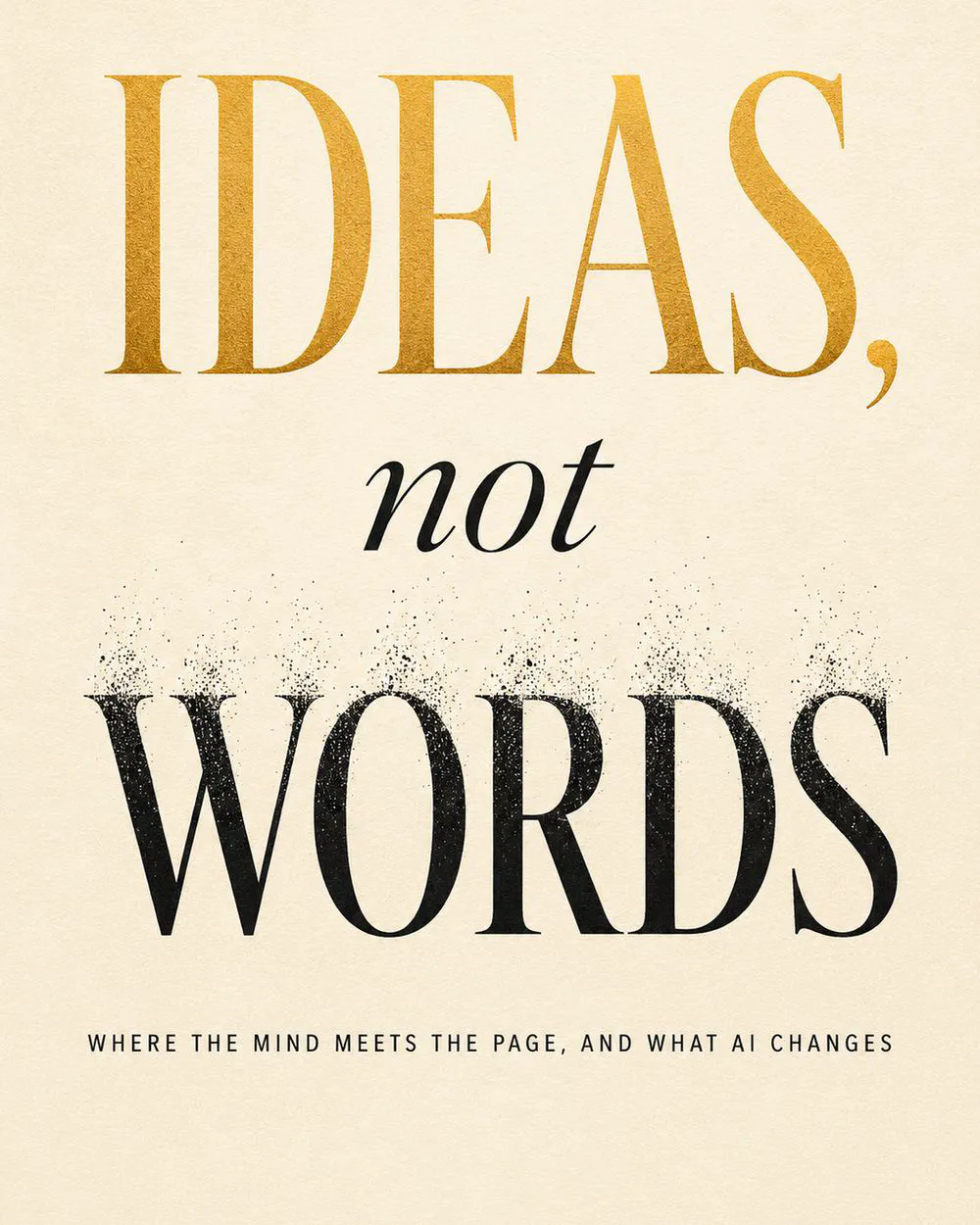

Algorithmic Motion: The Other AI Video Revolution
Diffusion video brought AI into the moving image first. Algorithmic motion may ultimately matter more because it turns motion into a writable, revisable, and scalable visual system.
I spent some time talking to ChatGPT Live. Its voice is flatter than Sesame's but it is the first voice that can access my obsidian vault, take instructions, …
Two AI launches in one week collapsed the same product boundary, revealing that chat is being demoted from destination to doorway — and the new race is over …
An essay arguing that intelligence is not a scalar height measured against us but a substrate-relative profile. The coming AI is not a "bigger us" ascending …
AI has made software generation so cheap that an entire category is now born disposable — created for a single context, used once, and discarded when the moment …
Skills give AI a set of instructions to follow — and instructions can be ignored. This essay maps Anthropic's dynamic workflows against a real writing …
AI produces "slop" (statistically average, fluent but hollow writing) not as a model failure but as an insight failure. Genuine originality requires standing at …
AI engineering has evolved through three compensatory phases (prompt, context, and harness), each addressing a failure the previous layer couldn't fix. Harness …
This essay argues that AI is reshaping software at an architectural level, moving from human-centered applications to a composable agentic ecosystem where CLIs, …
E-learning has built a $300B industry around the least effective slice of the learning model (formal instruction) while neglecting the experiential and social …
The essay explores cinema's 'mysterious characters'—figures whose opacity resists even patient observation—arguing that withholding creates gaps that transform …
Why did developers abandon polished IDEs for a terminal tool? The answer is less about AI than about Unix: a 50-year-old design philosophy of composable text …
Claude Code and CoWork share a codebase but diverge sharply — local vs managed-VM execution shapes resumability, attachability, and autonomy.
Claude Cowork marks Anthropic's pivot from chatbot to agentic AI: a productized Claude Code that plans, executes, and delegates tasks through sub-agents in a …
A historical analogy: today's LLMs are the steam engine of AI — celebrated as revolutionary, yet only half the architecture real superintelligence needs.
This article traces the evolution of Claude's Skills, Commands, and Agents, analyzing the fundamental tension between intent-matching intelligence and …
The Internet died once in 2000's dot-com crash, then was reborn solving unglamorous infrastructure problems. Today's AI boom mirrors that mania. The Internet's …
Reasoning in large language models is an important shift in artificial intelligence: from instant responses to deliberate problem-solving. How does the …
Four research papers suggest LLMs have layered internal states — and that 'alignment faking' and unfaithful reasoning are features of intelligence, not bugs.
The most consequential near-term use of voice AI is companionship, not productivity. AI companionship is rapidly emerging as a transformative force, reshaping …
Where AI speech synthesis stands in early 2025: hands-on test results, and why realistic text-to-speech is already displacing professional voice talent.
Local Intelligence, an Important Step in the Future of MAD (Mass AI Deployment)
Could AI make learning genuinely fun? On using AI as a storyteller — with humor, characters, and tiny cats — to make complex ideas engaging for kids.
“We shape our tools and thereafter our tools shape us.” — Marshall McLuhan
We are on the cusp of entering an exciting new era in the realm of writing, which I refer to as the third stage, AI-collaborated writing.
Now available in English for the first time, The Pursuit of Nothingness invites a new audience into its quiet yet powerful explorations of fate, suffering, …
Ever wondered how ChatGPT seems to know so much? Or how AI can write stories, answer questions, and even crack jokes? We're about to lift the curtain on these …
A 2024 primer on the technologies reshaping how we learn, framed by McLuhan's idea of media as extensions of man.
It is time to rethink productivity. Learn how to optimize your mental energy, increase focus, and achieve more with less effort.
MindDraft is a next-generation writing app designed to transform the writing process into a fully collaborative experience.
Lean, UX, Clicking Buttons and Starting a Tesla
What is elearning? Let's start from the beginning...
The slideshow, a cornerstone of contemporary teaching and presentations, indeed stands as the format of choice across countless domains in this century. …
Part 3 of The Craft of Elearning Development: designing mobile-friendly learning as mobile use overtakes the desktop — and why plain HTML is the answer.
What constitutes the rules of engagement for eLearning? How to enhance cognitive involvement, transforming passive content consumption into an active learning …
Given by Ida, I'm not Madame Bovary, The Favorite
Original book by Seymour Papert
Children, computers, and the future of programming education
Eisenstein the Tailor
The most elusive topic in film aesthetics has almost no scholarship behind it. A lecture that builds a working theory of camera movement from scratch.
...but didn’t know how to ask
Film director is called metteur-en-scène because his or her primary role is staging
There are films that talk a lot; and there are films talk a little. But finally, there are films that don’t talk at all. Is talking essential to cinema?
Is there a camera movement in this video?
The total cinema is already upon us, if you can afford it
Why are we still concerned about the reality behind impressions?
A seminal paper in cinema studies, still relevant to this day
What is deep about deep fake?
Original book written by Fareed Zakaria
A 2011 essay placing handwriting on the iPad — 'tabwriting' — within the long history of writing technologies, from pen and paper to the keyboard.
A case study of camera movement in Max Ophuls — moving past style-spotting toward a theory that reads the moving camera as artistic sensibility.
How far have we gone to reproduce the human voice; are we there yet?
Walden is a name that needs no introduction.
Emotion, memory and senses are inseparable. One always evokes the other. This seemingly innocuous statement in fact leads to cinema’s greatest potential.
“We shape our tools and thereafter our tools shape us.” — Marshall McLuhan
Best resource for learning French and getting to understand existentialism
This section delves into the concept of diegesis, or the film's world, arguing that the advent of sound transformed it from an image-based construct to an …
Here, the focus shifts to how sound immerses audiences within the cinematic world, exploring the spatial dimensions of sound and the technological advancements …
This is a close hearing: we are to examine the innovative sound design of Gravity, highlighting how sound plays a crucial role in creating a sense of space and …
This chapter was actually the first one written: it addresses the transformative impact of the human voice on cinema, examining how our perception of vocal …
Forget the unified, standard voices you expect from cinema. Chinese film took a fascinating turn, daring to embrace the vibrant tapestry of dialects after The …
▾ Collections
ongoing series, grouped by theme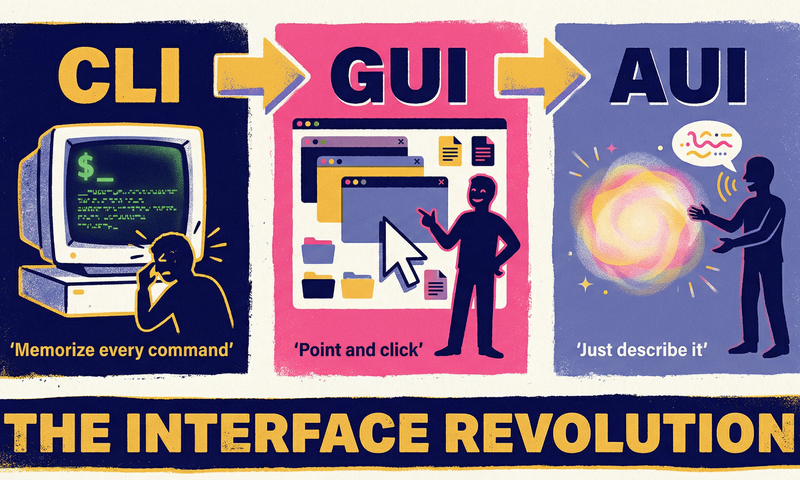
The Future of Software
How the command line, agents, and disposable code are reshaping the way software gets built.
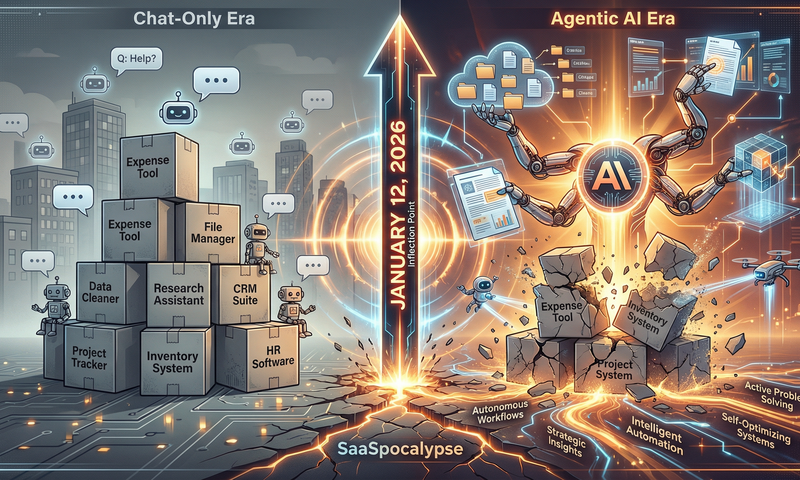
All About Claude
Essays on Claude, Claude Code, and Anthropic's agentic tooling.
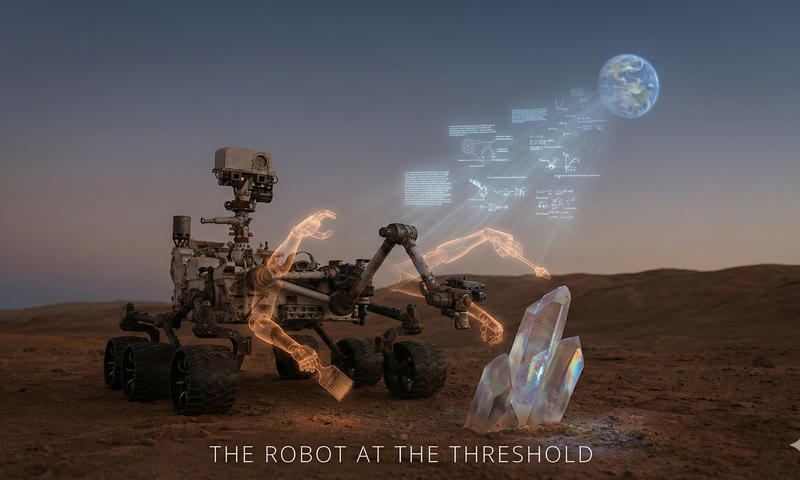
AI Ruminations
Broader reflections on intelligence, reasoning, and living alongside AI.
- We're Still Pumping Water from Mines: The Path to Superintelligence
- To Think or not to Think - How "Reasoning" in LLMs Evolved
- Feature of Bug? Toward a Psychology of LLM
- Prompt, Context, Harness: The Three Phases of AI Engineering
- Local Intelligence, an Important Step in the Future of MAD (Mass AI Deployment)
- The Death and Rebirth of AI - lessons from not so distant past
- AI Companionship on the Rise
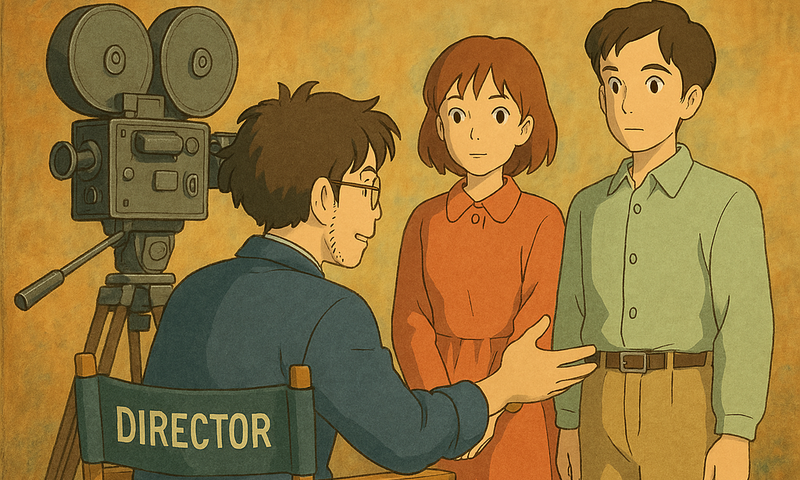
Introduction to Cinema
A guided tour through the craft of film — staging, cutting, camera, and how to read a frame.