The Decline of the Chat Empire

This Sunday I sat down with what I assumed was a simple question: what exactly is ChatGPT Work?
OpenAI had launched it a few days earlier, and the announcement copy was confident: an agent that takes on your most ambitious tasks, gathers context from your apps and files, and returns finished documents, spreadsheets, and websites. What the copy never quite explained was what the thing is. A new agent? A new app? A mode? A rebrand? The documentation was thin, so I designed a small experiment instead.
I gave the investigation to the product and its Anthropic equivalent. The same research prompt went to ChatGPT Work and to Claude Cowork — the two offerings I assumed were counterparts in this new “AI that does your work” category. The choice was deliberate: if ChatGPT Work is what its maker claims, it should be able to research its own category competently. The Cowork side is my reference set: what I assume can be done with this task.
Here is my simple prompt:
I would like you to investigate how ChatGPT Work is implemented. In particular, is this like claude cowork, a virtual machine? You can search for official documentations, and you can search for Reddit and see if anybody has written on this, I value very highly human analysis. Don’t make things up.
What is ChatGPT Work, Anyway?
The results were lopsided. ChatGPT Work mistook ChatGPT Work for plain ChatGPT. It misidentified itself, and even after I corrected it, it never produced a usable answer. Instead it produced a long chunk of tables, bullet points, irrelevant information, useless marketing slops: everything but what I actually asked it to investigate.
I’ll resist reading too much into the self-misidentification. Language models have training cutoffs; a days-old product with thin documentation is a genuinely hard research target, and I’m honestly not sure how Claude managed to do a better job. But as a snapshot of the moment, it’s hard to beat: the products in this category are now so tangled that nobody could tell you what is going on. Simon Willison, a person whose actual occupation is explaining AI developments to other developers, posted that he was “so confused” by the tangle of ChatGPT versus Codex versus Work versus Claude versus Claude Code versus Claude Cowork. When the field’s designated explainers are lost, the problem is not user education.
Claude Cowork came back with a genuinely good report on its rival, and the answers it found directly provoked this post.
Turns out ChatGPT Work is not a new product at all. It is Codex, OpenAI’s coding agent, rebranded and generalized. The standalone Codex app literally became the new ChatGPT desktop app. One Hacker News commenter who went hunting for the difference put it best: toggling between ChatGPT Work and ChatGPT Codex changes nothing visible. As far as anyone could tell, it swaps which plugins load by default and perhaps adjusts the system prompt.
It wasn’t one launch. On July 7, Anthropic merged Claude Cowork into the Claude chat interface: one home tab, one sidebar, one place for projects, with Cowork sessions newly able to run in the cloud. On July 9, OpenAI shipped its merged desktop app, with Chat, Work, and Codex in one place. Two days apart, the two leading AI labs collapsed the same product boundary.
When two competitors make the same confusing move in the same week, the interesting question stops being “what were they thinking?” and becomes “what do they want?”
Where Are My Chats?
The two mergers are not exactly the same kind.
OpenAI made the agent the home and moved chat in. The new “ChatGPT” desktop app is, under the hood, the Codex app wearing ChatGPT’s name; it even installs under the Codex package identifier. The original chat app was renamed “ChatGPT Classic.” The reception was a small revolt. Users on OpenAI’s own forums couldn’t tell whether their apps had been replaced, renamed, merged, or broken; the two apps’ icons were nearly identical; chat threads went missing; established workflows broke. Within a week, OpenAI’s Thibault Sottiaux publicly conceded the company “didn’t get everything quite right,” and the fix list was telling: restore the sidebar with chats and projects, clarify that Codex isn’t being killed, and untangle billing confusion that had let users burn through their budgets so fast that usage limits had to be reset twice in a single day.
Pay attention to that word Classic. Companies do not attach it to products they believe in. “Classic” is what you name the thing you are politely phasing out: it is Coca-Cola Classic, it is the legacy skin, it is the option kept alive for sentimental value. The naming leaked a belief: inside OpenAI, chat is the past and the agent is the product.
But the market disagreed, loudly. The single most common complaint about the new app was not about the agent at all. It was I can’t find my chats. The first thing OpenAI promised to restore was the chat sidebar. We have seen this movie before: in August 2025, OpenAI removed beloved older models during the GPT-5 rollout, met a wall of user grief, and reversed within days. The pattern repeats: the lab ships a launch that assumes users have already moved on to the future; users revolt; the lab retreats.
Anthropic went the other way: it kept chat as the home and moved Cowork in. Claude’s chat interface remained the front door; Cowork became a capability inside it. The reception was mostly positive — chat got superpowers.
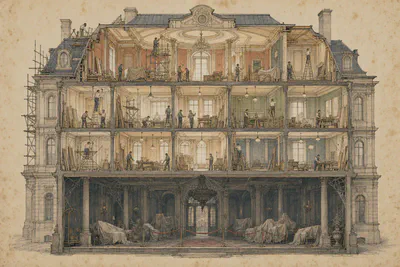
And here is the uncomfortable irony for OpenAI: the right solution shipped before the wrong one. Anthropic’s gentler merge landed two days earlier, and the pattern it established (chat/cowork/code) had been publicly visible in Claude’s three-in-one design all along. This wasn’t a puzzle with a hidden answer. That OpenAI shipped the harsher version anyway suggests something more troubling than a botched rollout: a weak grip on what its own users actually want. There is a first principle of interface migrations that predates AI entirely: you may invite people out of their comfort zone, but you don’t demolish the comfort zone while they’re still standing in it. Anthropic left the front door where it was and added rooms. OpenAI moved the door, changed the locks, and relabeled the old house “Classic.”
Here is my guess at what’s actually going on, and it is commercial. Chat is a solved, commoditized, margin-poor surface: the free funnel that brought hundreds of millions of people to AI, most of whom pay nothing, and never will, because free chat is already good enough for asking questions. Note that the new app hands Work and Codex to every tier, free included, so this is not about locking the good stuff away. It is about relocation. Chat converts almost nobody; an agent task, by contrast, runs into usage ceilings and upgrade prompts almost immediately. Seen through that lens, burying chat is not an oversight. It moves users off the surface that will never make money and onto the one that sells subscriptions, while every ounce of engineering ambition chases the enterprise revenue waiting on the agent side. The old interface decays partly by inattention (the shabby lobby of a building whose owners are renovating the executive floors) and partly, I suspect, by design.
What happens to chat is not death: it is a demotion, the first act of an empire’s decline. In both merged apps, chat is no longer where the work happens. Chat is not the work; the task is. In a task, work gets assigned and results get reviewed. Don’t confuse chat the product with conversation the form, though. The conversational form survives everywhere, the way Latin outlived Rome. But chat the product category, the app whose whole identity was the back-and-forth thread, is the thing being quietly walked out of the building.
The Attention Model Changes
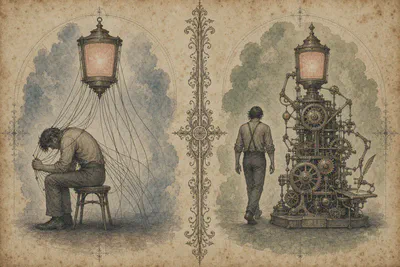
There is an old joke about a hapless errand boy. Sent to the market to buy fish, he finds the fish stall closed, so he walks all the way home to ask what to do. Sent back out for eggs instead, he finds the price has doubled, and walks home again for new instructions. The joke isn’t that he fails; within his instructions, he executes perfectly. The joke is that nothing he does survives contact with the unexpected. The plan lives with the person who sent him, so every wrinkle in the world sends him back to the doorstep.
For the past three years, that errand boy was AI — and we were the ones standing at the door. The first phase of AI adoption ran on the turn: you ask, it answers, you ask again. The interaction is synchronous, and the human is both the metronome and the keeper of the plan: nothing happens until you type, and nothing unexpected gets handled without you.
How did we cope inside that model? Prompt engineering: the promise that a rigorously composed, elaborate prompt would get you better results. It worked, up to a point, and it was exhausting: typing a small essay before every request is not a sustainable practice. My own inputs are often long, but they were never the structured incantations of the prompt guides, the “you are an expert in…” kind. I simply dictate everything in my head so the AI has more context to work with. Either way, the most important context of your work should not be the prompt: it should be previous work. In chat, you must hand it over again every single time, just as the errand boy’s plan lives with whoever sent him.
Cowork has a different answer to the same problem. Point it at a folder where you keep your documents, and the context is already prepared: the AI reads what’s there, revises the artifacts in place, and the setup survives from one session to the next without any repetitive briefing. (This is where it differs from the “Projects” feature in chat apps.) The folder, not the prompt, carries the context.
A task, then, is not an answer to a question; it demands an outcome. The AI may work toward it for minutes or hours. The outcome is dinner on the table, so it needs to deal with the closed fish stall and the doubled egg price on its own, and comes back when it’s done.
I used to explain the chat era to my learners with a plumbing analogy. Chat AI is telephone support: an infinitely patient expert walks you through the repair, step by careful step, while you kneel under your own sink holding the wrench. Genuinely helpful, and you are still doing all the work. What Claude Code showed people, for the first time, was what it feels like to invite the plumber into your house and watch the leak get fixed. Once you’ve had the plumber over, the phone call never feels the same again.
The attention model inverts. In chat, you keep yourself engaged. In task, you delegate and walk away. And once you notice the inversion, you can see the whole industry tooling up for it. Both Claude Code and Codex now ship a /goal command that points the agent at a completion condition (keep working until the tests pass, until the queue is empty) and lets it run for hours or days (if your token quota permits). Scheduled tasks run with nobody at the keyboard. Cloud sessions outlive the laptop that started them. None of these features make sense for a question-and-answer scenario.
Everything else follows from that inversion like dominoes.
The architecture follows. A task that runs for three hours cannot depend on your laptop lid staying open, so both labs shipped cloud execution the same week; what looked like coincidence was convergent evolution under identical pressure. But the deeper change is invisible: the harness around the model. A long-running task lives or dies on engineering that chat never needed. How efficiently can the agent chain its tool calls? How does it manage its own context so that hours of accumulated history don’t rot its reasoning? How does it recover when a step fails at 2 a.m. with nobody watching? Chat needed a text box and a model. Tasks need infrastructure.
The economics follow. Turn-by-turn conversation fits per-message costs and cheap subscriptions. And, less obviously, chat barely consumes AI at all. A conversational turn burns a trickle of tokens; a single programmer running Claude Code on a real project can easily burn hundreds, sometimes thousands of times more compute in a day than a casual chat user does in a month. If you sell intelligence by the token, chat users are window shoppers. Delegated tasks are where the actual consumption lives: they burn compute in unattended hours, which is exactly what $100-to-$200-a-month tiers are priced to cover, and exactly what made OpenAI’s launch billing blow up when agent economics hit users still carrying chat expectations. Nobody reads a menu before a conversation; suddenly the conversation had a bill.
The customer follows. The first phase of adoption was consumers marveling at a chatbot. The second phase is where AI has to pay for itself, and that means enterprises. Businesses do not buy conversations; a CFO cannot put “employees chatted with AI” in a business case. They buy outcomes. That’s why the new positioning language is all artifacts (finished decks, sheets, sites), and why ChatGPT Work rolled out to Enterprise and Edu plans first. Co-working with AI, in the literal sense of delegating real work and receiving finished products, is what this second phase is being built around.
And the lock-in follows. One merged surface means one sidebar, one memory, one home for your files, projects, and connected accounts. Whoever owns that surface owns your accumulated context, and context, not capability, is the real switching cost. Models leapfrog each other every quarter; your six months of project history does not transfer.
Both companies can see the same current; what July revealed, through icons and renames and forum meltdowns, is how differently they respond to it.
Read Your Users, or Read Your Rival
Anthropic’s merge is a product evolving in place. Claude has been a three-in-one experience more or less from the start: chat, Cowork, and code have lived inside one app; Claude Code was never released as a separate standalone desktop product. The July change collapsed tabs that were already under one roof and moved execution to the cloud, and the company’s own explanation was almost boringly organic: users kept hitting the “I have to leave my computer on” wall, so the product suggested its next step. You can question the execution (merging the chat and Cowork entry points has created its own small confusion about what that distinction even means anymore), but the logic is legible: observe how the thing is used, remove the next obstacle.
OpenAI’s merge has a different genealogy, and it’s one we’ve watched repeat. Codex, in its modern agentic form, was a response to the runaway popularity of Claude Code. The skills mechanism that quietly appeared across ChatGPT and the Codex CLI late last year was, as Simon Willison documented at the time, Anthropic’s invention adopted wholesale. And now the bundling: Anthropic has offered the unified, everything-in-one-app experience all along, and OpenAI, whose lineup was a scatter of ChatGPT, a standalone Codex app with an intimidating developer-brand name, and assorted experiments like the Atlas browser, moved to mirror it.
But mirroring a lineup exposes a gap. Anthropic’s lineup had three legible tiers: chat for asking, Cowork for delegating, Claude Code for building. OpenAI had the two ends, ChatGPT and Codex, and nothing in the middle. No counterpart to Cowork, no “Claude for work” equivalent to put on the comparison slide. So one was conjured: take Codex, load a different default plugin set, adjust the system prompt, and give it the name the category demanded. ChatGPT Work. That Hacker News finding about the toggle that changes nothing is the fingerprint of this origin. The product exists so that the matrix has no empty cell.
I don’t know who inside OpenAI made that call, and this is an outsider’s reading of circumstantial evidence; corporate motivations are unknowable from product teardowns alone. But the reading explains what the official story cannot: why the launch messaging accidentally convinced developers that Codex was being sunset (in a mirrored lineup, a standalone coding app no longer has a slot, and Sottiaux had to promise “we love Codex and it is here to stay”), and why the new app feels like chat stapled onto a coding tool’s chassis. That is the literal construction; reusing the Codex app was expedient.
None of this makes fast-following irrational: matching a competitor’s categories is a legitimate strategy, and OpenAI has the distribution to make even hollow categories real over time. But there is a cost, and the cost lands on users. A company that navigates by its users ships changes users can follow, even when bold. A company that navigates by its rival ships changes that make sense only in the boardroom’s comparison matrix, and from the outside, strategy-by-mirror is indistinguishable from incompetence.
And while we’re watching who reads whom: what is Google doing in all of this? The search giant has the best distribution on earth, a benchmark-topping model, and arguably more to lose from chat’s decline than anyone. Yet in this July race it is conspicuously absent. While Anthropic reads its users and OpenAI reads Anthropic, Google appears to be reading neither: Gemini’s consumer surface remains, as of this writing, a chat box. Its agentic experiments exist, e.g. Opal, Jules, Project Mariner, but they are scattered across different developer tools and not end-user friendly at all. To this day, Google has not even shipped a decent desktop app, and nothing that answers Cowork or Work where ordinary users actually live. I can’t help reading that as strategy rather than oversight. Google doesn’t want you living in an app, because an app takes you away from the territory it dominates: the web.
The Three Phases of AI Adoption
One more thing about timing: if OpenAI is playing catch-up in the middle tier, it is playing it at a six-month lag. Cowork arrived in January; ChatGPT Work arrived in July. Better late than never. But half a year is an eternity in this market, and it happens to be much longer than it took me, personally, to travel the full arc from excitement about this category to quietly abandoning it.
When Cowork launched in January 2026, I was genuinely excited. I could see the demand instantly: a safe, contained environment where an AI agent does real multi-step work while you watch from a comfortable distance. For businesses, the appeal was obvious. I expected it to become the center of my own workflow.
It didn’t. Within weeks, I had largely abandoned it, and the reason is the crack running through this entire product category. Cowork’s sandboxed design (the very containment that makes it safe to hand to a business) kept starving it of the context my tasks actually needed. A web fetch would get blocked here; a permission prompt would interrupt there. Each guardrail is defensible alone. Together they produce an assistant that must ask permission so often it stops being autonomous at all. A co-worker who knocks on your door every ninety seconds is not doing your work; you are doing theirs.
A concrete example: the very investigation that opened this post. Cowork produced the good report, but along the way it announced it could not read Reddit, even though my prompt had explicitly asked for Reddit threads. What exactly is the harm in reading a Reddit post? The results were still good; the walls still won. To finish the research, I handed it over to Claude Code.
So I drifted to the tool with the thinnest walls. Today, something like 99 percent of my AI interaction happens through Claude Code, and I configure it to run with permission checks dangerously skipped, because it has earned my trust: I know what it does and what it can do. It has nearly full access to my machine so it can get the context it needs: system folders, iCloud drive, all of it. The remaining 1 percent of my AI use goes through chat, mostly ChatGPT, for quick questions. I did not plan this ratio; it is a simple observation.
Cowork clearly serves an audience, largely an office-work audience by Anthropic’s own account, whose members presumably want the guardrails I chafe against. My use case is a bit different.
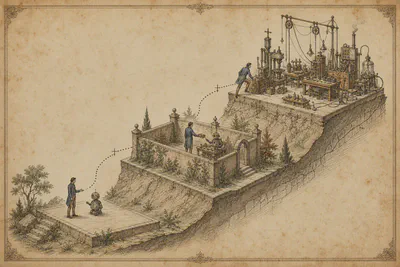
People are simply at different points on an adoption curve, and the phases are defined by the shape of your tasks, not by the sophistication of the person:
Phase one is asking. Your tasks fit inside a conversational turn: explain this, draft that, translate this paragraph. Chat serves these perfectly, which is why chat conquered the world. Phase two is tasking. Your tasks fit inside a natural boundary: assemble the report, reconcile the spreadsheet, build the slide deck from these notes. This is Cowork and ChatGPT Work — supervised autonomy inside protective walls. This is the phase the enterprise wave is buying, and the one both July launches are built to serve.
Phase three is building. Your projects need the whole workshop: your filesystem, your tooling, your accounts, hours of unsupervised execution. The walls that made phase two feel safe now just keep the agent away from the work. This is Claude Code and Codex territory: not co-working beside an AI so much as running a workshop with one.
A phase is not a rank; it is a fit between your work and your tolerance for risk. My work happens to be building things, so the curve dragged me along early.
And no, there is no phase four. Building is the ceiling: once the whole workshop is open to the agent, there is nothing left to unlock, only more work to hand over.
But notice what my 99-to-1 ratio actually is: a preview of chat’s new position. I still converse with AI constantly: to assign work, steer it, review it. The conversation didn’t disappear from my life. It moved, and it shrank into a supporting role. What happened to me one config file at a time is what the July mergers are trying to make happen for everyone, one default at a time.
The New Racing Track
Every specific thing in this essay (the renames, the retreats, the mirroring, my abandoned sandbox) is a symptom. They all point to the same conclusion:
The chat empire is in decline.
For three years, chat was the AI product. It was the interface that took a research curiosity and put it in a billion pockets; it deserves every bit of credit it gets for mainstreaming AI. But chat as the destination, the place where the value gets delivered one turn at a time, is over as a frontier. Both leading labs, in the same week, restructured their entire consumer surface around that conviction. One did it gracefully and one did it clumsily, but the direction was identical: conversation demoted from the product to the doorway; the artifact, the task, the finished work promoted in its place.
The mode pickers confusing everyone today (Chat or Work? Chat or Cowork task?) are temporary scaffolding around that transition.
But the decline of the chat empire will not dissolve with the scaffolding; it will accelerate. A new racing track has emerged for the next wave of AI applications, and the race on it is not for the smartest model or the smoothest conversation. Those are table stakes now. The race is for trust with delegation: who can take a goal, work unsupervised, reach into real context without being either dangerous or useless, and come back with something finished.
If you are building an AI product and your answer to “what do you offer?” is still a chat window, however brilliant the model behind it, you are polishing the previous category. You are competing brilliantly on the old track while the crowd moves to the new one. I’m looking at you, Google: a chat box on top of a benchmark-topping model is still a chat box, and shipping the world’s best answers matters less each quarter that the frontier moves from answering to finishing. The same question applies down the whole food chain: every startup whose product is “chat with your X,” every enterprise tool whose AI strategy is a copilot panel bolted to the sidebar, every educator still teaching AI as the art of asking good questions. The art of asking is not going away. But it is becoming the smaller half of the skill, the way knowing how to search didn’t disappear when the web matured. It just stopped being the job.
Do not ask AI “how good are your answers?”
Ask “what can you finish for me?”

Comments